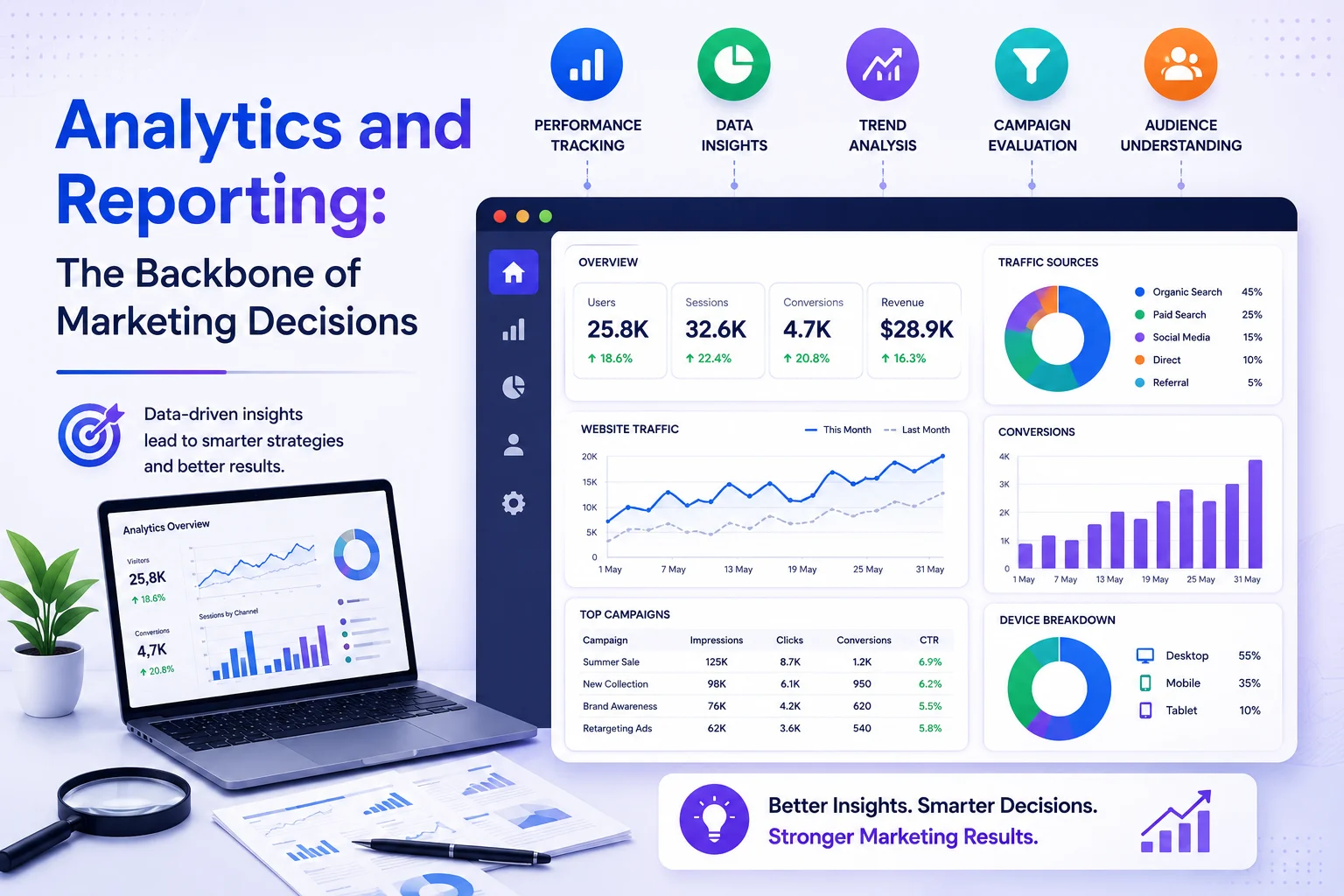
A campaign wraps up. Someone pulls together a report. It shows clicks, impressions, and a conversion number that looks decent enough.
Nobody in the room can actually say whether that campaign made money, whether the sale would have happened anyway, or which part of the funnel actually deserves the credit.
That's not a rare gap. It's the normal state of marketing measurement in most businesses -- and it's exactly why decisions still get made on instinct even when everyone insists they're "data-driven."
#The Gap Nobody Talks About
Here's the honest number behind that: 87% of marketers say data-driven decisions are critical, but only 32% actually trust their own data. That's not a small disconnect -- it's most of the industry running on numbers they don't fully believe.
The same pattern shows up in attribution. Multi-touch attribution adoption has nearly doubled since 2023, reaching around 41% of marketing teams. But only 18% of those implementations are rated as highly accurate by the teams using them. Adoption went up. Confidence didn't follow.
The tools got more sophisticated. The trust in what they're reporting didn't.
#Why the Trust Gap Exists
A few patterns explain most of it.
Data lives in silos. Ad platforms, CRM, website analytics, and finance systems each hold a piece of the picture, and few businesses actually connect them into one view.
Privacy changes broke old tracking assumptions. Third-party cookie deprecation and platform-level tracking limits mean the attribution models built years ago are working with real blind spots now, not minor ones.
Reports explain the past, not what to do next. Most dashboards are built to show what happened last month -- not to tell anyone what decision to make this week.
Vanity metrics crowd out the ones that matter. Impressions and clicks are easy to report. Revenue impact is harder to trace, so it often doesn't get reported at all.
None of these are reasons to abandon analytics. They're reasons most analytics setups are reporting activity instead of actually informing decisions.
#What Good Reporting Actually Does
The difference between a dashboard and a decision-making tool comes down to a few things.
It connects marketing activity to revenue, not just to clicks and impressions.
It shows the full customer journey, since most B2B buyers now cross more than 20 touchpoints before converting -- a single-channel report misses most of that path.
It flags what to change now, not just what happened last quarter.
It's built on data the team actually trusts, with a clear source and a clear method behind every number.
A report that technically has more data isn't automatically a better report. A report that answers "what should we do differently next week" is.
#Where This Actually Goes Wrong
The instinct when reporting feels weak is usually to add more tools or more dashboards. That rarely fixes the actual problem.
More dashboards without integration just multiplies the confusion. Five disconnected views of five different platforms isn't a clearer picture -- it's five conflicting stories.
Real-time data without a decision attached to it is just noise. Watching numbers update live doesn't help if nobody's defined what action a change in those numbers should trigger.
Attribution models get trusted more than they deserve. An attribution model with known blind spots is still useful -- but only if the team treats its output as directional, not exact.
#Getting This Right
Skip the instinct to fix everything at once. A focused approach works better.
Start with the business outcome, not the platform. Define what "working" actually means -- revenue, qualified leads, retained customers -- before choosing what to track.
Connect the data sources creating the biggest blind spots first. Usually that's ad spend, CRM, and actual revenue, not every tool in the stack.
Build reports around decisions, not just activity. Every recurring report should answer a specific question someone needs to act on.
Be honest about attribution's limits. Treat multi-touch data as a strong signal, not a perfect account of what caused a sale.
#Building Reporting That Actually Holds Up
Codegrin's growth team (https://www.codegrin.com/services/digital-marketing-growth-services) builds analytics and reporting (https://www.codegrin.com/services/ai-data-automation-services) around this exact approach -- connecting the data sources that are actually creating blind spots, and building dashboards that point to a decision instead of just displaying activity.
#Frequently Asked Questions
#Why This Actually Matters
More data isn't the goal. Data anyone in the room actually trusts, tied to a number that reflects real business impact, is. That's the actual backbone of good marketing decisions -- not more dashboards, but numbers everyone in the room is willing to act on without hedging.
Stop making marketing decisions on numbers nobody fully believes. Talk to Codegrin (https://www.codegrin.com/contact) about a reporting setup that actually holds up under scrutiny.


